Showing posts with label trademark. Show all posts

Monday, December 12, 2011

Bizarre Chinese Brand Approved By Pro-Life and Pro-Choice

Sometimes it is better to avoid literal translations. This might be an example: 
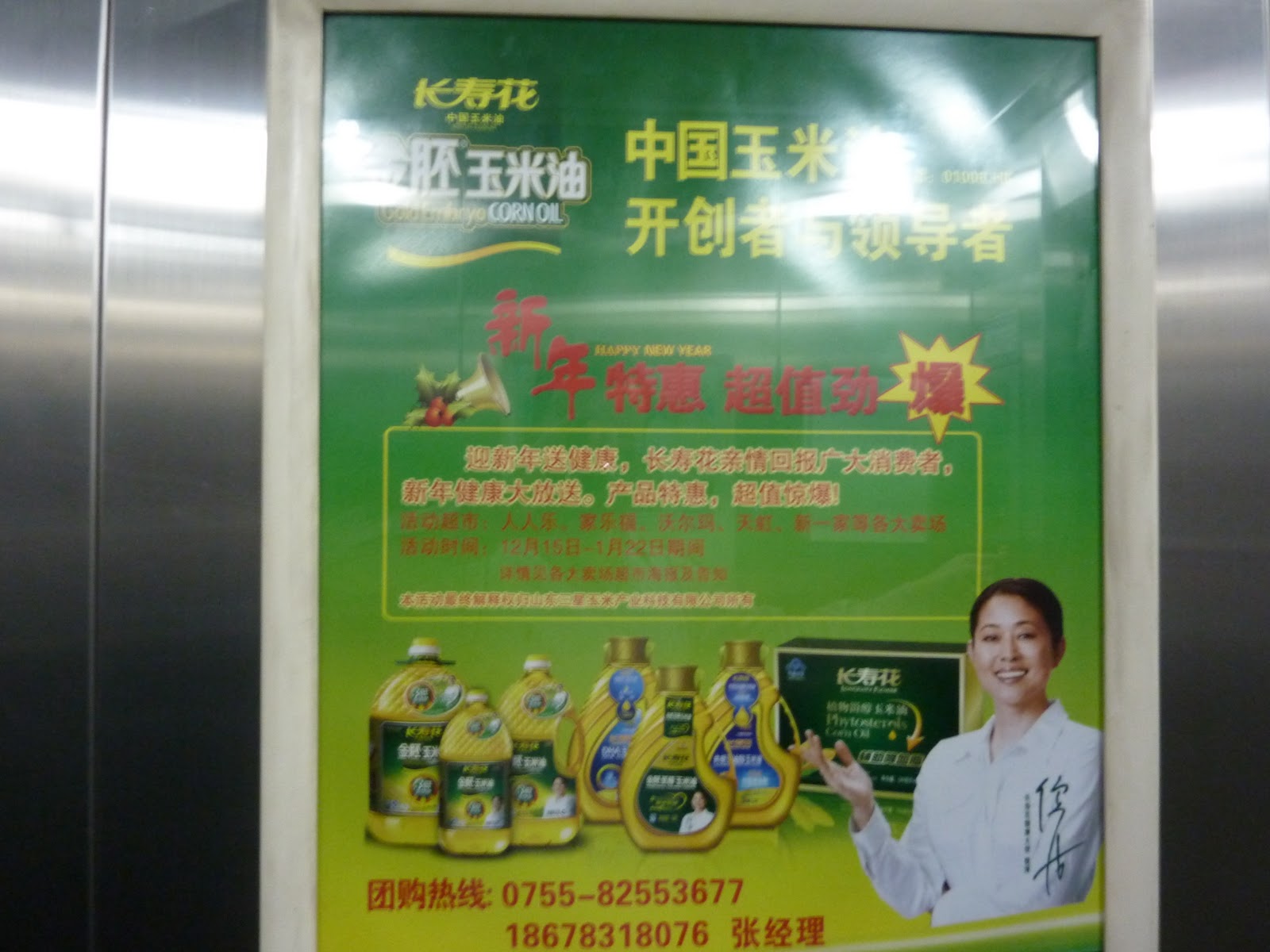
金 jīn 胚 pēi 玉 yù 米 mǐ 油 yóu = gold embryo corn oil. The association with embryos, even if they are golden, and corn oil, is probably not the most conducive to whet one's appetite. 

Photos are shot in a lift in Fu Tian Ti Yu Gong Yuan, Shenzhen
Photos: Danny Friedmann
continue reading ...

Friday, December 09, 2011

TGIF: Vacuum Cleaner Inventor Says The Darndest Things

Thank goodness it is Friday

Sir James Dyson was quoted by Dan Milmo in the Guardian, here, saying:

"They are running the risk of being expelled from the WTO. They are creating an unlevel playing field by taking our technology and selling it all over the world." 

With "they" Mr Dyson means China. I understand Mr Dyson's frustration, but the quote is grotesque. China cannot be simply pulled out of the World Trade Organization (WTO) equation. China is one of its key players. The idea about the WTO is to resolve the issues via a binding dispute resolution system. When Mr Dyson would have said that a dispute resolution procedure could be started against China's lack of IP enforcement or non-compliance of the national treatment principle (treating foreign companies at least as good as domestic ones), it would have made more sense.  

Police in Shenzhen. Aren't we ... visible?
Photo: Danny Friedmann
In the piece Mr Dyson, who invented the bagless vacuum cleaner and the bladeless electronic fan, makes the following clueless allegations to China:

- "China benefits from strictly monitored IP regimes outside its own border, but has failed to crack down on domestic offenders as it pursues rapid economic growth." Does China benefit much from strictly monitored IP regimes, if their alleged infringed products cannot enter into other countries? Did China fail to crack down on domestic offenders? One can argue that China failed to crack down on domestic offenders inadequately or insufficiently. But to assert that China failed to crack down on domestic offenders is simply not true (think about all the campaigns with the fancy names, see here 2010 and here 2011).
Mr Dyson backs up his claim with anecdotal, evidence: a patent infringement case he won, but where the infringers did not pay the fine nor stop their infringing activities.
- "China's reputation among foreign investors is being diminished by the flouting of product copyrights and a two-speed patent system that appears to discriminate against non-Chinese applications."
With "product copyrights" probably intellectual property protection is meant, which includes invention-patents, utility-patents, design-patents, trademarks, copyrights and trade secrets. To make such sweeping statements is not useful unless they are backed up by research that gives the status on how the intellectual property rights of British industries or European industries are protected. Until now Chinese foreign direct investments did not correlate much with China's level of intellectual property enforcement level. It seems more to correspond to China's economic growth. And I have not come across evidence that foreign patents on average are examined slower. Very broadly speaking a utility and design patent takes about half a year and an invention patent can take up to two years time. 

Dyson, the company, is spending 10 million UK pounds per year on legal costs (according to an article by James Hurley in the Telegraph, see here) and is also inventive to bring the intellectual property in China challenges under the attention of people in British government, such as David Cameron (prime minister) and Baroness Wilcox (IP minister). 

Inconvenient truth about intellectual property infringement
A Dyson bagless vacuum cleaner costs about 4,000 Yuan in China. Factory workers in Shenzhen make about 1,200 Renminbi per month and middle class earnings are about 4,000 Renminbi per month. The inconvenient truth is that the more a company has spent on research and development (as is the case with Dyson) or marketing and advertising (as is the case with luxury brands) the bigger the incentive for infringers to ride on the coat tails of some other companies' economic activities.
continue reading ...

Monday, August 22, 2011

Must Read Monday: China Should Change Its Perspective From Engineer To Marketeer

From an engineer's to
a marketeer's perspective,
one bridge too far?

Photo: Danny Friedmann
Malcolm Moore wrote a great article for The Telegraph about China's challenges to transform its industries from the world's manufacturers to the world's innovators, and how this good be a boon for some British companies. Read here.

Mr Moore wrote about the challenge suppliers to foreign companies, such as Foxconn, face:

"These Chinese companies are more confident, but they are led by engineers," said Geoff McCormick, the head of Alloy, a design firm that has been active in China for decades. "These firms are now being asked to be brands and not just engineering-led. But they have no track record at creation.They are happy to spend money, but only if they think there will be a return. So these are very difficult decisions for Chinese chief executives to make," he said."

And of course foreign companies will not be amused when their supplier starts to make their own competitive products under their own trademark. In some law firms there is the phenomenon of applying so called Chinese walls (information barriers), to separate one part of the firm which is representing one party from another part of the firm which is representing another party with contrary interests. It is highly doubtful whether Chinese walls can effectively be applied during the manufacturing process of a supplier/competitor.

For all foreign companies that complain about bad intellectual property in China. As long as Chinese companies copy the products of foreign companies, their problems are quite limited and can be solved or mitigated by using the enforcement routes effectively. The real challenge starts when they offer a better designed product under a more attractive brand. Legitimate competition is the real challenge.
continue reading ...

Friday, August 19, 2011

Trademarks That "Innovate and Beautify Life": China Trademark Festival, Chengdu

"Dreaming of innovative
 and beautifying trademarks"
Photo: Danny Friedmann
                 To avoid confusion:
                 - the cat's name is Puma not IP Kat
                 - he has no relation with a German
                   sportswear company.
                 
                  
As most Western eyes are focused on the Eastern coastal provinces of China Western China, including Sichuan Province, is switching to a higher gear. September 5 to 8, 2011, the 4th Session of China Trademark Festival (第四届中国商标节) will be held in Chengdu, Sichuan Province. The conference is organised by the China Trademark Association and Chengdu People’s Government. Venue: New International Convention & Exhibition Center, Chengdu, Sichuan Province. 

China Trademark Festival is a biennial event, which started in 2005 in Shenzhen, then 2007 in Changsha, 2009 Qingdao and now 2011 in Chengdu. 

This year's theme is both poetic and optimistic: 商标引领发展,创新美化生活", which means "a trademark that must lead to the development of an innovative and beautifying life".

Read more here (Chinese). Ms Grace Wang of Lehman, Lee & Xu can provide more information. You can send here an email: trademark@lehmanlaw.com.
continue reading ...

Rouse: IP China Express 340

" IP in China, dusk or dawn?"
Photo: Danny Friedmann
In the 340th IP China Express Rouse, the international IP business selected the following news items:

- Rubber products manufacturer Freudenberg victorious in a trademark conflict that has been going on since 2002. Finally the Trademark Appeal Board rejected the Chinese firm that wanted to register the same Freudenberg trademark.
-  Liu Binjie, head of the General Administration of Press and Publication, part of the National Copyright Administration, " with the rapid development and wide application of high technology (especially digital technology and network technology), the system of Copyright Law has faced formidable challenges" , therefore July 13, 2011, China has started to prepare its third amendment of its copyright law.
- Beijing First Intermediate People’s Court decided that Procter & Gamble's use ‘飘柔’ (Rejoice) in the Founder Qian typeface did not infringe Founder's copyright. Selling the software to Procter & Gamble implied consent that they could use it.
- Although Beijing-Shanghai High Speed ​​Rail was using technology imported from both the East Japan Railway Co. Ltd. and Kawasaki, the technology that it was seeking to patent was innovative. Therefore since 2009, China North Vehicle Group and China Academy of Railway Sciences have begun applying for patents abroad.
- Rouse also gives a summary of the 2006-2010 White Paper on Intellectual Property cases involving foreign parties published by Shanghai Second Intermediate People’s Court. Read IP Dragon's May 17, 2011 article about it here.

Read the Rouse's IP China Express here.
continue reading ...

Friday, May 27, 2011

Siren Got Rid of the Letters "Starbucks"

Starbucks revised its logo for the fourth time (1971, 1987, 1992 and now in 2001), see overview here.
It was announced already January 5, 2011 by senior creative manager Mike P. here.

Logo change announced on Hong Kong TV on the MTR
Photo: Danny Friedmann
However, only May 27, 2011 the new logo was introduced in Hong Kong and Shenzhen. To change a brand like that is a huge operation, which starts with the design and customer surveys, then the registration of the trademark for the new variant logo.

The rationale behind the move, in the words of Mike P:

"From the start, we wanted to recognize and honor the important equities of the iconic Starbucks logo. So we broke down the four main parts of the mark – color, shape, typeface and the Siren. After hundreds of explorations, we found the answer in simplicity. Removing the words from the mark, bringing in the green, and taking the Siren out of her ring. For forty years she’s represented coffee, and now she is the star."
continue reading ...

Friday, April 22, 2011

China's Supreme People's Court Will Tell You How Safe Safe Harbours Are

Photo Rneches
Main entrance Supreme People's Court Beijing
The writers versus Baidu case triggered the Supreme People's Court to draft a judicial interpretation of online copyright, and can be expected this year. A refinement of the Regulation on Protection to Network Dissemination of Information, is welcomed. Hopefully the Supreme People's Court will succeed in making the principles crystal clear whether a safe harbour applies or an online service provider is held contributorily liable. The president of the Supreme People's Court, Kong Xiangjun was quoted by Li Mao saying:  "The judicial interpretation would help protect copyright owners, network service providers as well as online users [..]." Judge Kong also said that half of all copyright cases were online cases. I hope they also illuminate the subject of online trademark, which sometimes is interpreted analogously with online copyright, but, given is distinct character, deserves its own attention from China's highest authority in the interpretation of the law.

Read Li Mao's article for the Global Times here.
continue reading ...

Tuesday, April 05, 2011

Unoriginal trademarks unpopular in Quanzhou. Good news or wishful thinking?

Hao Nan of China Daily wrote about the trade at the Quanzhou Trademark Trade Center in Fujian that almost dried up. Read here. Why did not Adam Smith's invisible hand work? Was the invisible hand here invisible, to quote Joseph Stiglitz, because it was not really there? Hao writes that the problem was that
sellers had an inflated expectations of the price of their brands.

Ge Yongli, general manager of the Fujian Asia-Pacific Intellectual Property Organization was quoted by Hao Nan as saying: “They quote high prices not because their trademarks have such great value but due to a strong resemblance to some international renowned trademarks.”

Stan Abrams of China Hearsay writes: “That doesn’t sound good at all. Not surprising, though. This is the short-cut mentality that you get with emerging markets, and despite the tremendous numbers of trademark filings in China, the commercialization side is still pretty young.” Read here.

This impasse might be a positive sign. Are the buyers just realistic, that in this time and age they better start with an original name to build up their own reputation? Wishful thinking? At the moment it might be not so nice for the people working for the Quanzhou Trademark Trade Center if they have nothing to do. But I am sure the market will come up with new realistic price, it always does. I hope in this price the possibility of getting sued for trademark infringement is factored in.
continue reading ...

Saturday, November 27, 2010

Copied Gun Manufacturer Starts Campaign Against Manufacturers of Copied Copied Guns

MadBull Airsoft launched Operation Copycat', a campaign against counterfeit and cloned airsoft (in between real and toy) guns, read here.

"The enforcement of intellectual properties of gun manufacturers and gear makers in airsoft has been ongoing for sometime now. We know of Umarex, Cybergun, and Magpul on the watch for companies, and mostly at the retail end to block the export and sales of clones and unlicensed products coming out from the Far East, mainly from Mainland China."

Airsoft is a hobby for grown-ups that like to use 1:1 replicas of real guns to shoot each other with plastic pellets. Read more here.

A manufacturer of copied guns that starts a campaign against a manufacturer of copied copied guns? Is this not tu quoque? Well the airsoft manufacturer has the license of the gunmaker to use the design from the manufacturers of the real guns. In some jurisdictions the licensee of a trademark, copyright or design right can enforce the right of the intellectual property holder. Then the airsoft manufacturer has its own trademark and might have copyright and design rights (if it is visible).
continue reading ...

Wednesday, November 17, 2010

More Chinese Trademarks More Vehicles of Innovation = More Innovation?

China Hearsay's Stan Abrams takes a critical look at statistics about trademark registrations in China. He is rightly filleting the alleged relationship between increased trademark registrations and a growing awareness of trademark protection among Chinese entreprises, read more here.

However it could be said that the growth of trademark registrations in China would indicate two things:

- More companies want to build their own brand;
- Brands are a way to exploit innovation. So you can have a patented invention, which needs a trademark if you want to sell. The question, however, remains: if there are more vehicles of commerce for innovative products, will there be more innovation? In other words:

More trademarks equals more innovation?

多商標 = 多技術創新?
continue reading ...

Friday, May 28, 2010

Is It a Plane? Is It a Bird? No It is the Bleagle! Made in China

Stan Abrams of the China Hearsay (which has been totally upgraded) reports straing from the INTA in Boston about ... Geely's Gleagle. Mr Abrams is giving his always entertaining thoughts about trademarks that consist of made-up words.

Read more here.
continue reading ...

Friday, March 19, 2010

Madrid, A Bit Chilly For China's International Trademark Filings

  • China is still the most designated country, with 14.766 in 2009, which was a drop of 17.2 percent from 17,829 in 2008.
  • According to the State Administration of Industry and Commerce (SAIC)'s statistics China's domestic trademark applications in 2008 were estimated to be around 800,000. See article ChinaIPR here.
  • Novartis of Switzerland that was the largest filer in 2009 (136 international trademark applications) followed by Lidl (Germany), Henkel (Germany) and Zhejiang Medicine Company. How many this Chinese company filed WIPO did not say.
  • China is both a member to the Madrid Agreement and Protocol.
Catherine Saez of Intellectual Property Watch wrote that WIPO's director general Francis Gurry said that the interest in China is not so much the infringement threat but the fact that China represents a massive market, and companies may face a lot of competitors.

Read more about the impact of the global financial crisis on the number of international trademark filings in 2009 here and Catherine Saez' article for Intellectual Property Watch, here.
continue reading ...

Wednesday, February 03, 2010

IPR Jurisdiction: Third Civil Division of Haining Municipal People's Court Specialises in Copyright and Trademark Disputes

Haining Municipal People's Court in Zhejiang Province set up the Third Civil Division, specializing the trial of civil cases concerning copyright disputes, trademark disputes and other related types of intellectual property rights disputes. Read the article here.

First instance IP appeal cases of TRAB and PRB will be heard by the IP Tribunal of the Beijing No. 1 Intermediate People's Court. Read the article by Howard Tsang and Lilian Shi of Wilkinson & Grist for Managing Intellectual Property Magazine here.
continue reading ...

Thursday, December 17, 2009

Giorgio Armani Not Amused By Giormani of Hong Kong

IP Dragon was strolling in Sha Tin (沙田), minding his own business, until he came across a Giormani shop. Was Giorgio Armani saving costs by using less lettering on the billboards?

Italian designer Giorgio Armani, who built the vast Emporio Armani (empire Armani) of clothing and luxury products, will probably not be amused that Kelvin Ng and Jane Tong founded Giormani, a Hong Kong sofa furniture design and manufacturing company in 1999. It's website tells you that they work with young designers from Italy, Germany and Hong Kong. Therefore, we can exclude the possibility of Giorgio Armani designing for them, since he is only young at heart.

If Giorgio Armani registered its trademark in Hong Kong he could probably do something about the sofa business. And even when he did not register his trademark, since Hong Kong has a Common Law system, it means that he can enforce his unregistered trademarks with the legal figure of the tort of passing off.

However the plaintiff should proof the classic trinity:
The goods or services have acquired goodwill or reputation in the marketplace that distinguishes such goods or services from competitors;
The defendant misrepresents his goods or services, either intentionally or unintentionally, so that the public may have the impression that the offered goods or services are those of the claimant;
and The claimant may suffer damages because of the misrepresentation.

The Trademark Ordinance of Hong Kong states in the introduction: "No proceedings lie to prevent, or to recover damages for, the infringement of an unregistered trade mark butnothing in this Ordinance affects the law relating to passing off."
continue reading ...

Friday, December 04, 2009

Starbucks Is Coming From Venus, Copycats from St. Mars

Jamon Yerger is founder of Southern Perspective Shenzhen ("China Law Reference, doing it right the first time"), a consulting company in the bustling city of Shenzhen that provides advice on a range of business functions; the majority of which deal with manufacturing in China and legal protection for foreign companies engaged in supply chain activities. Mr Yerger wanted to go to a Starbucks. And he did not mean Starbucks in the generic sense, as some people already use it for any place where you can buy a daily doses of caffeine. Although "colors, script, umbrellas and even the glass awning over the doors" were similar to his old Starbucks, he found out, to his surprise, it was not coffee shop of this also in China pretty well known brand (I am not referring to the legal term well known mark. This would be the case if it is well known in China, and acknowledged as such by China). They only used a different name: St. Mars. So the place had the look and feel of Starbucks. IP Dragon agrees with Mr Yerger's opinion that St. Mars is "clearly hitchhiking" on the Starbucks brand. So what could it mean in legalese?

The question is whether Starbucks registered the name Starbucks Coffee in China. If you are at the trademark search site, sponsored by the Trademark Office of the State Administration for Industry and Commerce (first select "Search of identical or similar TMs", then fill in class 30 for non-alcoholic beverages), here, you will find that Starbucks has several trademarks. You could then argue that Starbucks Coffee and St Mars Coffee, using the identical font, and the identical colour, is confusingly similar and infringes Starbucks trademark. Maybe Starbucks separately trademarked the colour, which would lead to trademark infringement. The design of parts of the place could be patented in China. And if the copycat cannot be stopped by trademark law or design patents, copyright law might be a place of last resort. China is coming up with a Tort Law (December 5th, was the deadline for submission of comments), see here, and maybe the legal figure of passing off will be introduced, which I doubt, since it is more of a Common Law legal figure. Anyways read Mr Yerger's article, see the pictures of the two places and decide for yourself here.

Read also Starbucks versus Xingbake here.
continue reading ...

Wednesday, October 28, 2009

Professor David Llewlyn Explained All IPRs in One Hour

IP Dragon was attending yesterday evening the very inspiring lecture of Professor David Llewelyn at the University of Hong Kong, about the importance of intellectual property rights for not only experts, but everybody.

Professor Llewelyn made clear that the lecture was a public lecture meant for non-experts; the normal consumers; and put experts and expertise in perspective. He quoted Lord Denning that in the dictionary for example the word barrister comes directly after bankrupt and just before bastard. "IP needs to be understood, especially in this part of the world [referrring to Asia] by many constituencies that don't relate to each other. Patent people can only think about patents. Trademark people about trademarks etc." Professor Llewelyn was determined to speak only about the good things of intellectual property rights, so not about counterfeiting, pirating and the pressure of the developed countries on local developing governement officials.

Professor Llewelyn was referring to patent in all its meanings. The sentence: "It is patent" for example means "It's available." He was recalling Huawei who overtook the number one position of the company with the most patents from Panasonic. Professor Llewelyn was going to say only good things about IPRs, but as a good friend of IPRs, he critisised IPRs starting with patents: most were vanity publishing.

Then he was filleting the quality of some Hong Kong patents, and after a pit stop to the "stepsister of patents': trade secrets, he was off to trademarks. Professor Llewelyn told about the dispute between Jiangyou in Sichuan province and Anlu in Hubei province, who both claim their city as the hometown of the famous poet from the Tang dynasty called Li Bai.Jiangyou was not amused when they became familiar with a commercial on China Central Television (CCTV) that identified Anlu as the hometown of Li Bai. According to the South China Morning Post, Xinhua reported that the Jiangyou had registered the trademark "the Hometown of Li Bai, the City of Chinese Poems" in 2003. Therefore Anlu's commercial allegedly violated the trademark. Never mind that Jiangyou nor Anlu was the birthplace of the ancient poet, which was small town in what now is Kyrgyzstan, as the South China Morning Post mentioned.

Professor Llewelyn urged companies to think ahead: Chinese computer maker wanted to expand abroad, but they forsaw problems with the trademark legend that was already trademarked in many countries. Therefore they decided to change their name into Lenovo, which is distinctive enough and not descriptive or laudatory. Professor Llewelyn pointed out the possibility that trademarks could be used in an unfair manner, to bully other companies into submissiveness. As an example he gave KFC who sued an neighbourhood restaurant for infringement of the use of the trademarked term 'family feast'. He draw the history of Hong Kong artist Michael Lau and his relation to trademarks/bootlegs.

Genericide was discusses as well. Escalator, tabloid were generic names, but not roller blades.

Then the subject changed to geographical indications. The danger always lurks that two states, such as Indonesia and Malaysia start fighting over a term for food: such as who owns Nasi Lemak.

The territorial nature of intellectual property rights were discussed.

Copyrights you obtain for nothing; but the flipside is that they only forbid the right to copy; and another challenge is the digital era, as you can read in "Free", the book by Chris Anderson. Professor Llewelyn referred to China's threats to sue over fake terracotta warriors, as a subject that is outside the scope of copyrights. Professor Llewelyn compared it with the Egyptians that want to copyright the pyramids.
Normal copyrights are the life of the creator plus 50 years (China, which is TRIPs standard) or 70 years (many countries). In the UK there is special legislation for the play 'Peter Pan, or the boy who whould not grow up' to give it perpetual copyright in order to finance the Great Ormond Street Hospital.

Among intellectual property rights are strange creatures, such as database rights.
And many new players such as UNESCO are getting in to the act as well to protect rather exotic new intellectual property rights.

Intellectual property rights are liabilities, unless you do something with them. Commercialisation is getting more popular.

There are only five countries in the world with a net balance of payment: US, UK, Japan, Sweden and France. China has taken this well into account and makes sure that it is self innovating in order to avoid to pay too much royalities.

When one analyses intellectual property rights one can do it from many perspectives. An academic (access to information) has another perspective than an author of a book (control of information). Professor Llewelyn told about a student in Beijing who asked him to sign a copy of his book that was "better bound than [his publisher] Sweet & Maxwell."

Anti-competition law is becoming more important in intellectual property right law. Professor Llewelyn advocates a balance between extremes.

A development we must take an eye on is according to Llewelyn developing countries, such as India, that demand green technology of the developed world.

Hong Kong lawyers were always more interested in transactions of IPRs, registering etc. than in advising them about how to best exploit their IPRs.

In 60 minutes Professor Llewelyn covered a lot of ground. Ron Yu asked him whether IPRs are not getting too complicated for the average consumer. Professor Llewelyn answered: "Yes and also too complicated for the experts."

IP Dragon asked him about his take on the new international IPR forum ACTA, and whether it would be a threat to forums such as WIPO and WTO's TRIPs? Professor Llewelyn answered that he does not like the new forum, it will be more complicated.

So there will be a great need for people who can explain and illuminate these complicated issues in an inspiring way in the future, just like Professor Llewelyn.
continue reading ...

Monday, October 12, 2009

Is Coffee-Mate a Generic Term for Coffee?

Stan Abrams over at China Hearsay is posing a question mark whether Coffee-Mate in Chinese is a generic term and therefore diluting the trademark of Nestlé. See the China Hearsay article which is not devoid of humour here.
continue reading ...

Thursday, May 14, 2009

Taylor Wessing Global Intellectual Property Index and China: The Last Shall Be The First

The People's Republic of China was ranked last (24th position) in the Taylor Wessing Global Intellectual Property Index 2009, see here. The methodology of the GIPI rating is a calculation by a factor assessment model with jurisdiction assessments and instrumental factors as input. See the methodology here. 

About China's trademark system Taylor Wessing complains about the delay in adopting the new Trademark Law which it sees as the solution to the registry delays and backlogs. The time from application to publication of trademarks in China is according to Taylor Wessing currently three years and the duration of opposition procedures up to five years. It says that there is an "absence of any protection for unregistered marks, save the 230 or so marks held to be “famous” (of which only about 20 are foreign), remains a concern for respondents." Taylor Wessing is more positive about China's National IP Strategy and an electronic application system which has cut costs and allocated filing receipts and application numbers quite quickly.

About China's copyright system Taylor Wessing wrote: "China trails overall, as well as for each
of the attacking, enforcing, exploiting and cost-effectiveness subindices." The lack of effective enforcement of copyright is respondents' primary concern, as is bureaucracy associated with giving evidence, and criminal remedies that are perceived as too low, underused and with thresholds set too high, civil and administrative remedies inadequate. Taylor Wessing mentioned also the harsh criticism China received from the USTR in the Special 301 Report. The supporting argument that China faces the "the harshest and most in-depth criticism" because it was covered in 24 pages while the other 45 countries only got 16 pages is not very convincing. It is not the quantity but the quality of the commentary that counts. On a positive note Taylor Wessing acknowledged that the US government considers that progress is being made because China is fulfilling its WIPO Copyright Treaty (WCT) and WIPO Performances and Phonograms Treaty (WPPT) and WTO TRIPs obligations. 

About design Taylor Wessing wrote that "China’s courts have awarded $3 million to the German
bus maker, Neoplan, in one of the biggest design patent infringement awards since China joined the WTO in 2001." China’s design system which requires annual renewals of designs (plus renewal fees) is seen by respondents as onerous and in need of reform, according to Taylor Wessing.

About China's domain names system Taylor Wessing wrote that although China has liberal registration rules it ranked low, because domain names are extremely cheap to register in China, which has encouraged domain name squatters. Taylor Wessing: "It remains to be seen whether the recent exponential increase in numbers (nearly 90% last year) is an ongoing trend or a spike, and also whether brand owners’ awareness of the issue and increasing interest in doing business in China will lead to them registering more pre-emptive .cn domain name." 

About China's Patent system Taylor Wessing was quite positive: "China certainly has also made significant efforts over the past few years to improve its IP systems." The respondents appreciated China's new specialist IP courts, that are relatively much speedier than before and anticpate the Third Amendment to the Patent Law which will take effect October 1st, 2009 and will introduce the absolute international novelty standard and the possibility of compulsory licensing for patents unused within 3 years of grant. 

I am not sure whether Matthew 20:16 (King James Bible) can bring any consolation for China's low score, but here goes: "So the last shall be first, and the first last: for many be called, but few chosen."
continue reading ...

Wednesday, May 13, 2009

Google Will Continue To Investigate Trademarks as Keywords in China, Hong Kong and Macau

Imagine that your competitor can advertise with your name using Google AdWords. This nightmare can come true in the following jurisdictions: 'Regions for Which Google will not investigate the use of trademarks as keywords'. So far the People's Republic of China, Hong Kong SAR and Macau SAR are excluded from this practice. 
continue reading ...

Friday, December 05, 2008

Japan Sake Brewers' Hangover After Chinese Trademark Squatting

Japanese sake and shochu brewers that want to start exporting to China were not amused when they found out that their brands have been registered by Chinese trademark squatters, that want to sell the trademarks to the Japanese brewers, especially since 2004. The Yomiuri Shimbun writes:

".. of the 25 liquor trademarks used by Japanese firms, five already have been registered in China, and the rest are under examination."

In the article the author writes a few times about registrations at the "patent office". However, this must be "trademark office". In China you can register invention-patents, utility-patents and design-patents at the patent office, which is part of the State Intellectual Property Office (SIPO). Trademarks, however you only register at the China Trademark Office (CTMO), which is part of the State Administration for Industry and Commerce (SAIC).

Read the Yomiuri Shimbun article here.
continue reading ...